
Simulation for Competence, Safety, and Better Outcomes

What We Do at CU-HEARTS
The state-of-the-art simulation centre supports high-quality education, training and research across medicine, nursing, public health and interprofessional learning.
The centre operates at the intersection of:
- CUCOM
- CUCON
- CUCOPHT
- CUCBHPE
Simulation Modalities
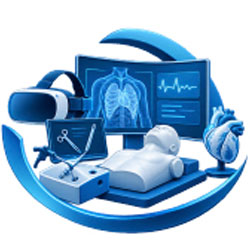
- High-fidelity manikin-based training
- Scenario-based simulation
- Standardised patient simulation
- Procedural-skills training using partial-task trainers
- Screen-based and digital simulation platforms, including Body Interact
- Hybrid simulation and integrated clinical-skills training

Scope of Activities
- Simulation-based education for medical, nursing and public-health students
- Clinical-skills development and competency-based training
- Communication, teamwork, leadership, professionalism and clinical decision-making
- Interprofessional education and collaborative-practice training
- Simulation-based assessment and competency evaluation
- Faculty development in simulation, debriefing, assessment and curriculum integration
- Research, innovation and educational scholarship
- Development of simulation-based curricula and educational programmes
- Quality-improvement and patient-safety initiatives
- Courses, workshops, certificate programmes and continuing professional development
- External partnerships, collaborations and consultancy services
Vision
To become a globally recognised centre of excellence in simulation-based education, strengthening clinical competence, patient safety, innovation and scholarship to transform healthcare education and improve patient outcomes.
Mission
CU-HEARTS advances healthcare education through immersive simulation, clinical-skills development, interdisciplinary learning and evidence-informed research. The centre integrates innovative technology, scholarly inquiry and experiential learning to develop competent, compassionate and future-ready healthcare professionals.
Quality Policy
CU-HEARTS is committed to excellence in simulation-based healthcare education through quality assurance, evidence-informed practices, stakeholder engagement and adherence to national and international standards. Continuous improvement supports educational effectiveness, professional competence, patient safety and organisational excellence.

Have an idea in mind?
Don’t hesitate to collaborate.
Bring your idea. Let’s work together to advance simulation-based healthcare education and transform healthcare.
CU-HEARTS welcomes opportunities to collaborate with academic institutions, healthcare organisations, educators, clinicians, researchers, professional bodies, and industry partners in simulation-based healthcare education and training.
Whether you have an idea for a simulation course, training programme, workshop, research project, faculty development activity, assessment, curriculum initiative, webinar, or institutional partnership, we would be happy to explore the possibility of working together.

Collaboration Request
Fields marked * are required.